
The development of intelligent and adaptive guidance and control systems represents an important step toward achieving robust autonomy in future space exploration missions.
Spacecraft operating in increasingly complex and uncertain environments require the ability to make autonomous decisions, adapt to changing dynamics, and maintain reliable performance under challenging operational conditions.
Reinforcement Learning (RL) and meta-Reinforcement Learning (meta- RL) offer promising approaches to addressing these challenges by enabling autonomous systems to learn effective guidance and control strategies and adapt to previously unseen operating conditions.
This lecture will introduce the fundamental concepts of RL and meta-RL from a guidance and control perspective, including Markov Decision Processes, policy optimization, actor–critic architectures, and learning across distributions of tasks. Particular emphasis will be placed on the ability of meta-RL to exploit prior experience and rapidly adapt learned policies to variations in system dynamics, environmental conditions, and mission parameters.
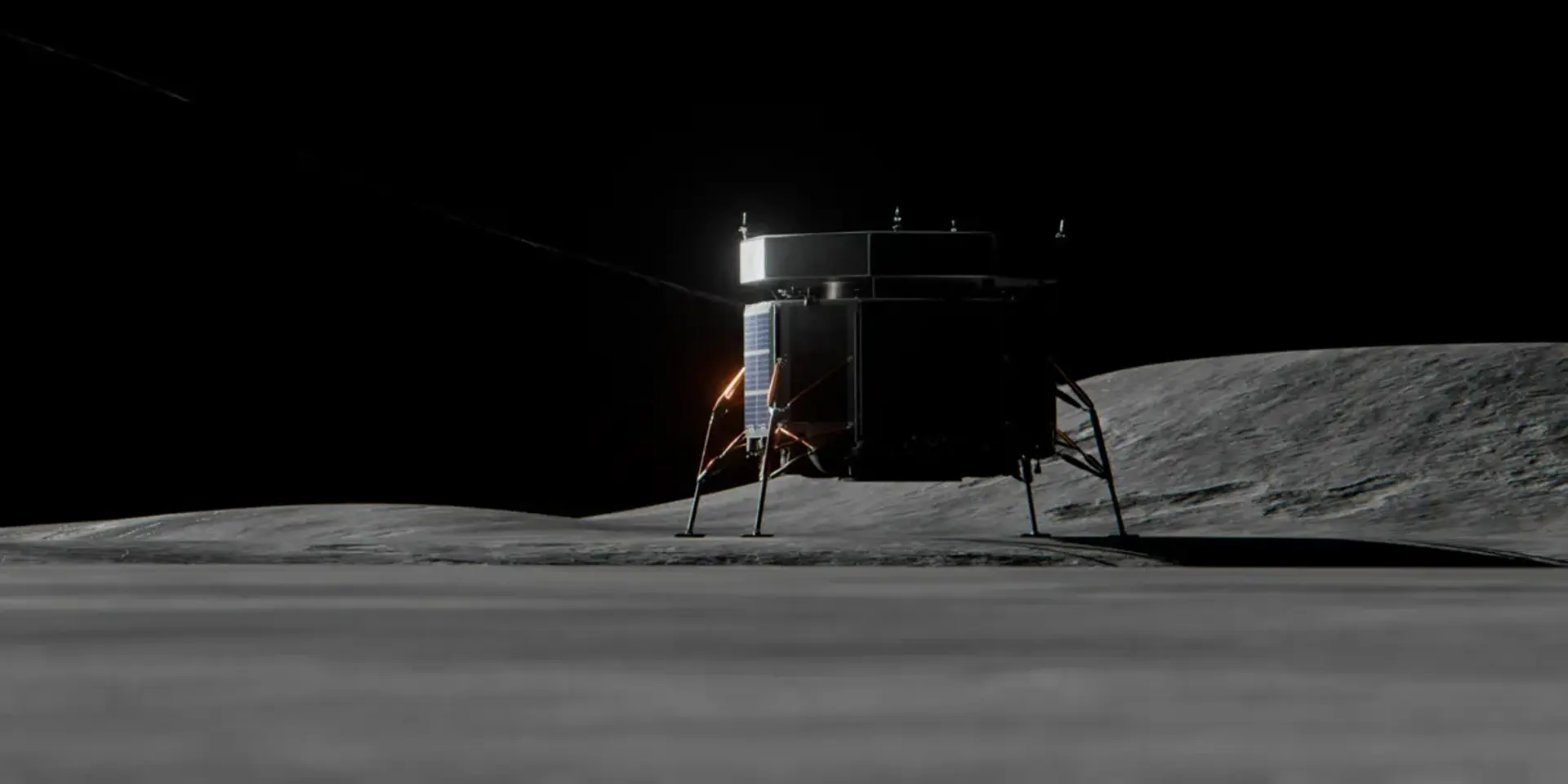
Building on these foundations, the lecture will explore representative applications of learning- based guidance and control to autonomous space systems, with particular emphasis on planetary landing.
Examples will include image-based guidance approaches that integrate visual observations with learned control policies, as well as more advanced six-degree of-freedom (6- DOF) landing scenarios involving autonomous hazard detection, avoidance, and adaptive guidance.
The discussion will then focus on recent developments in meta-RL-enhanced fractional- polynomial powered-descent guidance (FP2DG), illustrating how learning-based adaptation can be integrated with analytically structured guidance laws to improve flexibility and robustness while retaining a physics-based formulation.
The final part of the lecture will address the critical challenge of explainability in learning-enabled guidance and control systems.
In particular, the Sparse Identification of Nonlinear Dynamical Systems (SINDy) framework will be introduced as an approach for extracting interpretable mathematical representations of learned control policies, facilitating their analysis, validation, and assessment within safety-critical autonomous systems.
Together, these developments illustrate how reinforcement learning, meta learning, analytical guidance, and explainable artificial intelligence can be combined to advance the next generation of adaptive, interpretable, and trustworthy autonomous space systems.
Speaker
Dr. Roberto Furfaro is a Full Professor in the Departments of Systems and Industrial Engineering and Aerospace and Mechanical Engineering at the University of Arizona, where he also serves as Deputy Director of the Space, Security, Safety & Sustainability Center (S4C). He received his Laurea Degree in
Aeronautical Engineering from the University of Rome “La Sapienza” and his Ph.D. in Aerospace Engineering from the University of Arizona.
Dr. Furfaro is internationally recognized for his work in space systems engineering, guidance, navigation and control, artificial intelligence for aerospace systems, and Space Situational Awareness. His research spans autonomous guidance and control for planetary landing and hypersonic vehicles, close-proximity operations around small bodies, and machine-learning-enabled
space autonomy and space domain awareness.
He has served as Principal Investigator or Co-Principal Investigator on numerous NASA, AFRL, and other federally sponsored programs, with total awarded funding exceeding $80M, and has authored more than 120 peer-reviewed journal articles and over 300 conference papers and abstracts. From 2011 to 2016, Dr. Furfaro served as Systems Engineering Lead for the Science Processing and Operations Center of NASA’s OSIRIS-REx Asteroid Sample Return Mission.
He currently leads the Target Follow-up Working Group for NASA’s NEO Surveyor Mission and serves as Chair of the International Neural Network Society section on Artificial Intelligence for Space Systems Engineering. He is a Fellow of the American Astronautical Society and an Associate Fellow of the American Institute of Aeronautics and Astronautics. In recognition of his contributions to OSIRIS REx, asteroid 2003 WX3 was officially renamed 133474 Roberto Furfaro.
The seminar can be attended online at this link: https://politecnicomilano.webex.com/meet/pierluigi.dilizia
Photo credits: ©ESA
23.11.2026