
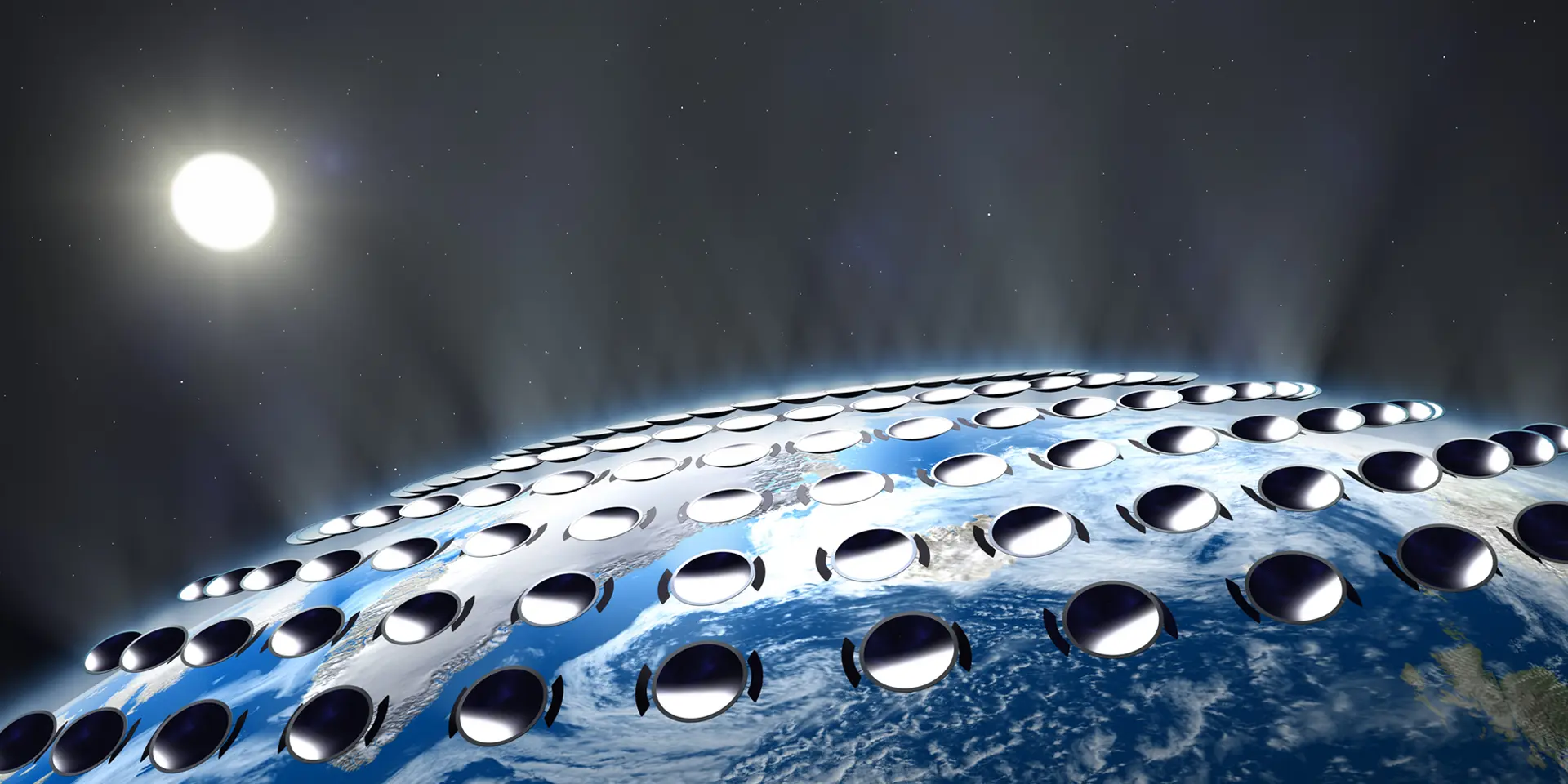
Orbiting solar reflectors is a concept that can be classified under the umbrella term space-based solar power.
Thin, ultralightweight orbiting reflectors operate with the simple idea of reflecting sunlight from space to a planetary target to enhance the illumination on ground.
An application of solar sailing, this idea has a century-old history with proposed applications from terrestrial solar energy enhancement to street illumination, studied by the likes of NASA and the Russian Space Agency with in-orbit demonstrations.
Indeed, the US-based start-up ReflectOrbital is currently planning to launch two reflector satellites to test the technology in orbit.
Research on the feasibility of this concept has been conducted over the past five years, by Onur Çelik, Assistant Professor at TU Delft Faculty of Aerospace Engineering, with a focus on orbital dynamics aspects for terrestrial solar energy enhancement.
In this talk, the speaker will share the research progress and the discussion in this area through his research activities, with an outlook to how such a technology could enhance planetary exploration.
Speaker
Onur Çelik is an Assistant Professor at TU Delft Faculty of Aerospace Engineering. He has obtained his PhD degree from Institute of Space and Astronautical Science (ISAS), JAXA with research on lander-surface interaction in small body surfaces at the intersection of astrodynamics and planetary science.
At JAXA, he was involved in the earlier stages of MMX and DESTINY+ missions for a proposed lander payload and interplanetary trajectory design, respectively.
Before TU Delft, Onur spent over three years as a Postdoctoral Research Associate at the University of Glasgow, carrying out research on the orbiting solar reflector concept for terrestrial solar energy enhancement.
His research areas span astrodynamics, planetary science and space systems engineering with multidisciplinary applications.
Free admission, open to all members of the university community and the public, subject to availability.
24.03.2026