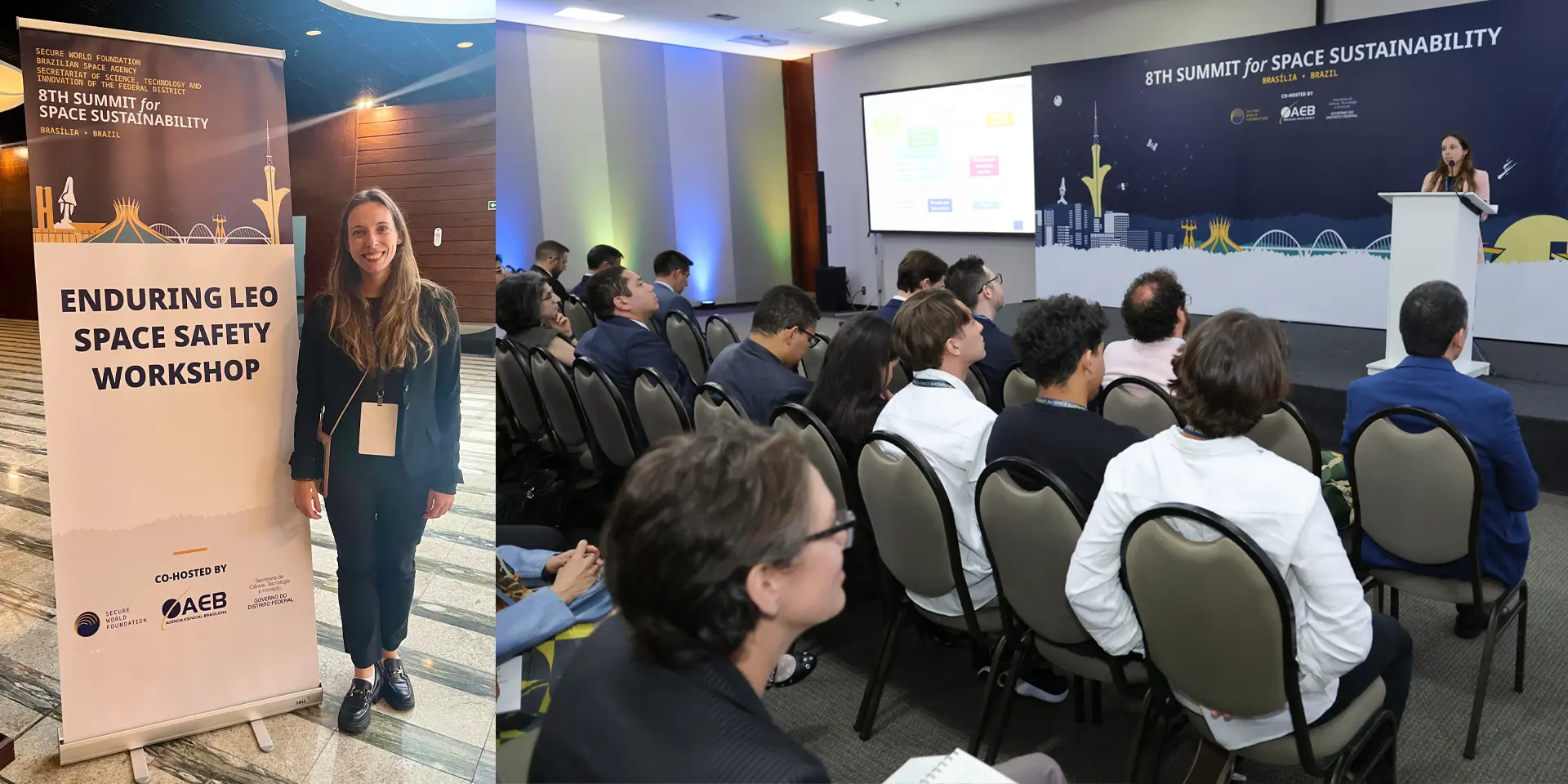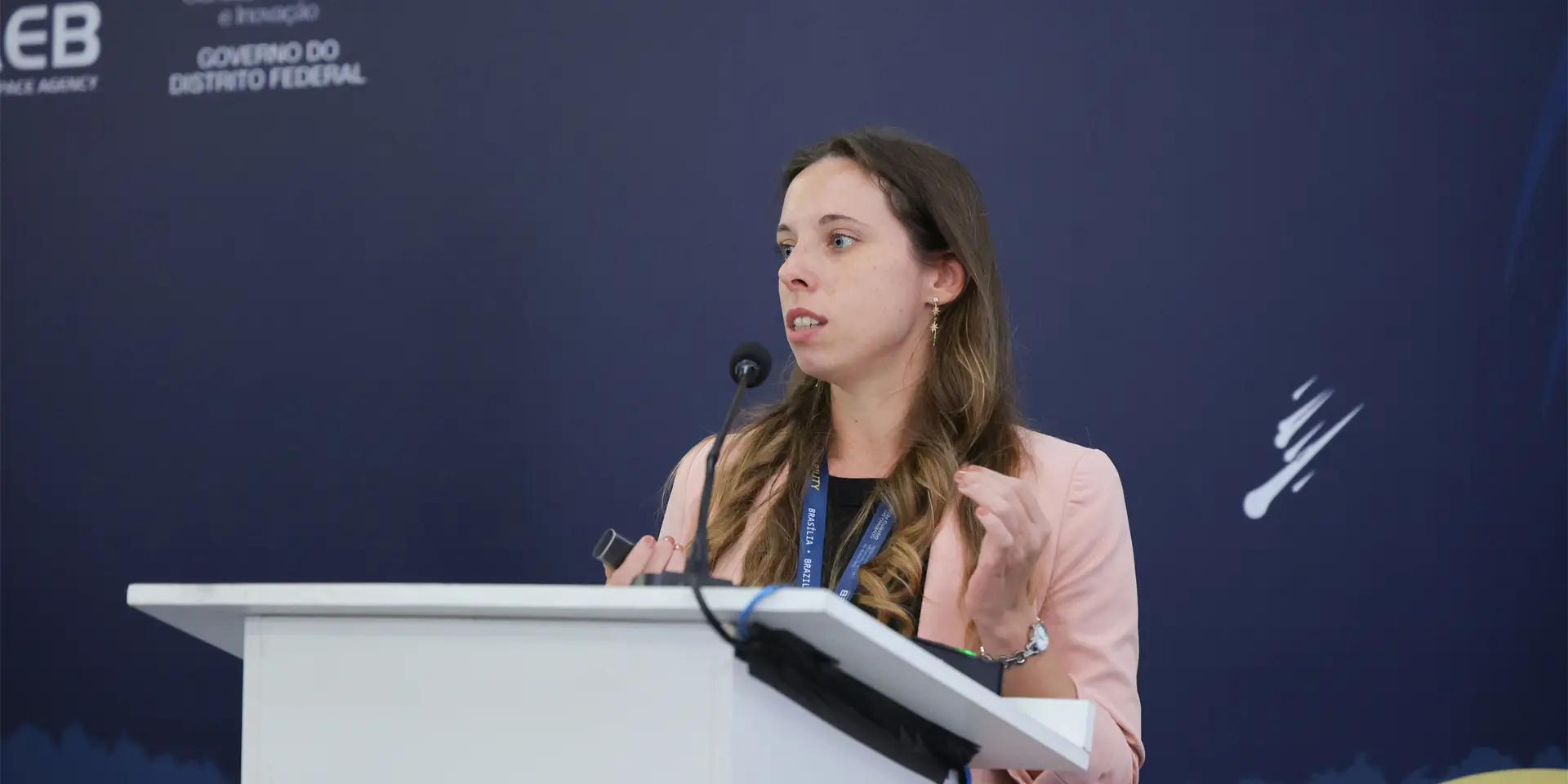
On 4th November 2026, Martina Rusconi delivered a spotlight talk during the session “How Modeling Can Inform Policymaking for Space Sustainability”. The presentation highlighted her research and the activities of COMPASSLab on space debris environment modelling and control-based approaches to the assessment and definition of mitigation strategies, with particular emphasis on the ERC-funded GREEN SPECIES project.
The GREEN SPECIES project aims to develop a novel interdisciplinary framework for modeling the space debris population and controlling its evolution, providing evidence-based support for the definition of mitigation and remediation policies and regulations.
The talk explored how quantitative models can help identify and compare mitigation options, supporting informed decision-making towards the long-term sustainability of the orbital environment.
The session brought together international experts working on different aspects of space sustainability, who presented ongoing projects and emerging research directions aimed at informing space sustainability policies.
On 6th November 2026 Martina also participated in the “Enduring LEO Space Safety Workshop”, which focused on key challenges for the safety of operations in low Earth orbit, including space situational awareness, space traffic coordination, and orbital debris management. Through expert contributions and group discussions, participants explored technical, operational, and policy challenges, as well as possible approaches to improving the safety and sustainability of space activities.
The 8th Summit for Space Sustainability, brought together policymakers, industry representatives, researchers, and other stakeholders from around the world to exchange perspectives on current challenges in space sustainability and discuss possible approaches to address them through research, international cooperation, and policy development.